A professional camera with full manual controls can take almost any photograph you can imagine, but hand it to someone who has never used one and they’ll come back with a blurry mess. A phone camera in “auto” gets a good-enough shot for almost anybody, instantly, but try to do something unusual with it and you can’t, because the choices were already made for you. More control, harder to use. Easier to use, less control. That is the whole trade-off, and once you notice it you see it everywhere: in software, churches, political parties, science books, and the law. The rest is five walks through that one shape.
Software stratification
Start with a pattern I’ve carried for years and call software stratification. Someone releases a very general library that lets its users do anything within a domain, but because it is so general it is hard to use: the list of options is so vast that most people get stuck on the learning curve. You end up with a few power users doing remarkable things and a lot of people who quit before producing anything.
So some of the power users build abstractions on top, simplifying the common cases. To simplify, you have to remove options, and for every option you take away in the layer above you have to fill in a default below. Which options you expose and which you choose on the user’s behalf is the whole craft of the abstraction. The two Python graphing libraries make it concrete: matplotlib is the general, powerful one, seaborn the abstracted, easier one. A scatter plot with a regression line, first in matplotlib:
import matplotlib.pyplot as plt
import numpy as np
from scipy import stats
import pandas as pd

# Assuming we have data
df = pd.read_csv('data.csv')
x = df['height']
y = df['weight']

# Create the plot
fig, ax = plt.subplots(figsize=(8, 6))

# Scatter plot
ax.scatter(x, y, alpha=0.6, color='steelblue', s=50)

# Calculate and plot regression line
slope, intercept, r_value, p_value, std_err = stats.linregress(x, y)
line = slope * x + intercept
ax.plot(x, line, 'r-', linewidth=2)

# Customize appearance
ax.set_xlabel('Height', fontsize=12)
ax.set_ylabel('Weight', fontsize=12)
ax.set_title('Height vs Weight', fontsize=14)
ax.grid(True, alpha=0.3)

# Show confidence interval (requires more complex calculations)
# ... additional 10-15 lines of code for confidence bands

plt.tight_layout()
plt.show()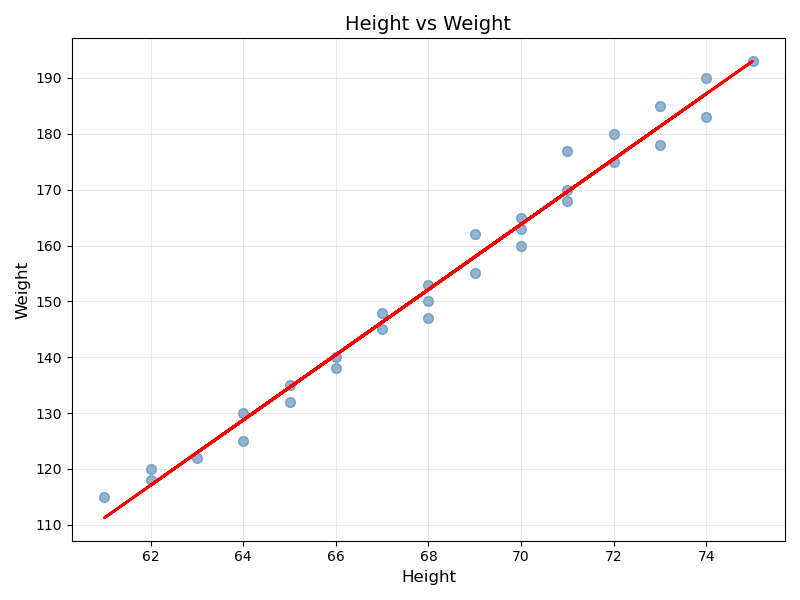
And now seaborn:
import seaborn as sns
import pandas as pd

df = pd.read_csv('data.csv')

# Create the same plot
sns.regplot(data=df, x='height', y='weight')
plt.show()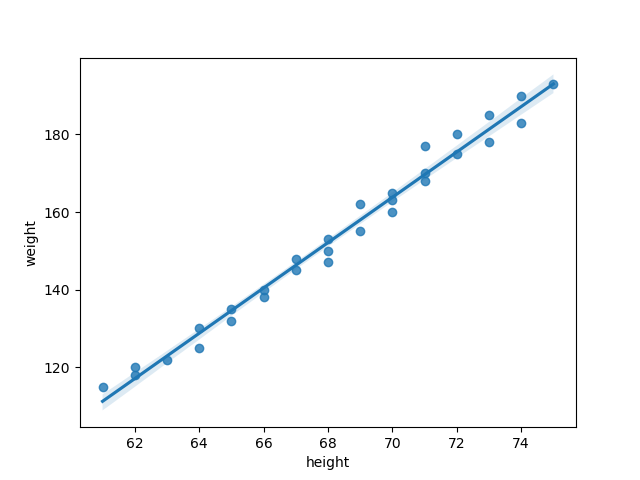
The code to produce effectively the same plot is drastically different, because seaborn makes the choices for you, and even adds things it judges useful, like a confidence band around the regression line (the blue shading). It lowered the barrier to entry, and in doing so removed the user’s ability to fully explore what plotting in Python can do. It constrained the user’s options for the sake of accessibility. In software this is called being opinionated: the tool has opinions about the right way to do the common thing and quietly makes those choices for you.
Religion
The same trade shows up the moment you look at how religions reach people. Take Catholicism around Vatican II. The pre-reform Latin Mass sits at the high-optionality, low-access end: the ritual carries a great deal of doctrinal precision, with gestures and fixed-form Latin prayers pointing at specific theological commitments and their centuries of qualification. A practitioner who knows the apparatus has access to the full form; one who doesn’t participates in the surface without reading what it says. The vernacular Mass is the other end: local language, simpler gestures, and a liturgy built to be participable by people who haven’t trained for it. Access goes up, often dramatically, and some of the specific commitments the Latin form encoded arrive in language general enough to be read several ways.
That is the same curve matplotlib and seaborn sit on. The Latin Mass is matplotlib: powerful, precise, hard to use. The vernacular Mass is seaborn: opinionated, accessible, a lower ceiling. And the same tension surrounds both pairs, traditionalists arguing the access wasn’t worth the lost precision, reformers arguing the reverse, everyone tacitly agreeing you can’t have both at once. The gradient recurs across traditions: classical Arabic recitation versus translated Quran, Talmudic study in the original versus English translation, Orthodox liturgy versus evangelical praise music. Many traditions that scale past their founding community end up making the trade explicitly, often through an institutional split, with the high-optionality form preserved by a smaller specialist community while the high-access form reaches the wider audience.
Political platforms
Parties live on the curve too, and its shape drives much of what looks like political dysfunction. A broad-tent party in a winner-take-all system has to assemble a plurality out of voters who agree on little except who they don’t want to win, so it flattens its platform: it avoids specific commitments any sub-coalition would reject and emphasizes the few things they share. High access, low optionality. A narrow party in a proportional system has the opposite shape: it only has to clear a threshold to enter coalition talks, so it can afford a detailed, internally consistent platform for a specific constituency. Low access, high optionality. That the electoral system drives this split is the substance of Duverger’s law: plurality rules tend toward a few broad parties, proportional rules toward many narrow ones.
The trade is visible in real time. When a broad-tent party takes a sharp position on a divisive issue, part of the coalition peels off; when a narrow party broadens its appeal, its core defects. No major coalition party in a winner-take-all system has solved this; they all spend their effort managing it. Hold onto the political version, because later, when I argue for institutions that move precise ideas between groups who don’t share a starting point, this is the wall they run into: broad coalitions survive by stripping out the precision that integration needs.
Scientific popularization
The popular science book is seaborn for whatever field it draws from. Stephen Hawking’s *A Brief History of Time* is the canonical case: general relativity, quantum mechanics, and cosmology for a reader with no background in any of them. By acknowledged design it is a seaborn-style abstraction, full of choices about which apparatus to skip and which analogy to substitute for which equation; Hawking’s editor cut every equation past E = mc², explicitly trading optionality for access, and the book sold more than 25 million copies. The papers it popularized have been read in full by a tiny fraction of that, mostly specialists. The same shows up across fields: Sagan’s Cosmos, Dawkins’s *The Selfish Gene*, Sapiens, the pop-econ shelf. Each drops most of a field’s optionality to gain access, reaches an audience the original literature never could, and gets criticized inside the field for the precision it judged worth losing.
Two things about this case. It interacts directly with the earlier chapters on transport and selection: the popularization is the compressed form that travels, the technical literature the complex form that doesn’t, and the curation gates from Chapter 1 decide which compression gets made. And it is where the bridge node becomes visible. A good popularization is written by someone who paired deep knowledge of the field with the flexibility to translate it, and the book is the trace of that bridging work. A Brief History of Time worked because Hawking had both; weaker popularizations fail in one direction or the other, too specialist to read or readable but wrong.
Legal codes
The clearest version may be in law. A statute drafted by professional counsel is the high-optionality end: every clause has a specific scope, every defined term is chosen to interact correctly with hundreds of others across statute and case law, every “shall” and “may” and “subject to” does precise work a generalist cannot see. Read a section of the U.S. tax code or the GDPR and the precision is real and substantial and the access, for a non-lawyer, near zero. The plain-language summary is the other end: “GDPR means companies have to tell you what data they collect and let you delete it” is the seaborn version of ninety-nine articles, a hundred and seventy-three recitals, and thousands of pages of case law. Accessible, and stripped of the precision that decides the edge cases: when data must be deleted, what counts as a controller versus a processor, when consent must be explicit.
What’s distinctive about law is that the institution expects both forms to coexist: the statute is canonical, the summary is the access form, and specialists bridge between them case by case, charging for the bridging work. It is preservation-and-training inside one profession. It is also one of the cleanest cases of the bridge itself being gated by wealth: getting the precision applied to your situation means hiring someone whose time costs money. That is the legal profession’s version of what Chapter 10 calls cost-shifting, and even the cleanest institutional bridge between the two ends produces an access asymmetry that scales with money.
What the curve is, and what it isn’t
Stand back and the shape is one shape: more optionality buys precision at the cost of access, more access buys reach at the cost of precision, and you can’t have both at once in a single artifact. It recurs across these domains because it is about the receiver, not the domain. Every reader, believer, voter, and non-lawyer has a finite receiver budget and a finite stock of structure to hang new material on. The precise form encodes distinctions that need structure the receiver may not have; the accessible form was compressed to fit the structure most receivers already do. The optionality-vs-access trade is the receiver budget, showing up in the design of the artifact. From here on, when a later chapter says a popular form gains reach at the cost of precision, or a technical form keeps precision at the cost of reach, this curve is what it means. It is the receiver-side mechanism behind Chapter 5’s complexity-virality trade-off, it is what Chapter 8’s preservation-and-training pair is for (preservation holds the high-optionality form, training expands budgets so more can reach it), and it is the curve Chapter 11’s decompression-on-demand might, for the first time, let a single artifact serve both ends of at once.
One distinction has to be kept, because “lots of options” has been doing two jobs. The curve is about artifacts: how much of a domain’s precision a designed thing keeps, against how easily a receiver can pick it up. It is not a claim about the domains those artifacts point into. An artifact has a top: matplotlib is enormous and brutal but finite and masterable, and power users who command the whole library exist. The domain it points into, everything you could express by turning data into a picture, has no top, and nobody commands it. That bottomless thing is what I work through separately in the abyss: the possibility space of a sufficiently complex field, so vast no one can navigate it, which takes real competence even to perceive. A software library is not an abyss; the library is a finite map, the abyss the territory the map is of. Optionality-vs-access is the trade you make when you draw the map. The abyss is why you have to draw one at all.
Where I’m still uncertain
- “The same curve everywhere” is a strong claim from five domains. I haven’t surveyed cases where it might not hold, like mathematical proof, where precision is absolute but access scales with training and neither end obviously has a ceiling. The safer claim may be that the trade is structural under most conditions but breakable under specific institutional setups I haven’t worked out.
- The framing may understate the medium. I blame the curve on the receiver budget, but the medium imposes its own limit too: a 280-character medium can’t carry a high-optionality form even for a reader who has the budget. The honest version is probably receiver-budget and medium-capacity jointly.
- Law’s wealth-gated bridge is darker than the others. Software, religion, politics, and popular science all keep the access end broadly available even when the optionality end is professionally gated. Law builds the wealth-gated bridge between them in as a structural feature. Whether that is unique to law or a pattern the other domains hide is something I haven’t engaged.